
“We’ve never done this before.” Families tell us that all the time. Home care often starts after a sudden change, like a fall, a hospital stay, or a new diagnosis. At first, the process can feel confusing.
The good news is that getting started is simpler than most people expect. If you’re paying privately, you don’t need a doctor’s script. You just call us.
Saba Home Health Care is an independent, family-owned agency based in Toms River. We’ve been helping families start care since 2016. Below is a quick look at each step, with more detail underneath for anyone who wants it.
Steps To Get Started With Home Care
Step 1: Make the First Call
Call us at 732-797-0700 and tell us what’s happening. Maybe your father had a fall. Maybe your wife is coming home from rehab. Or perhaps you need a little more help at home yourself. You don’t need every answer yet. We’ll ask about daily routines, health concerns, and when you hope to start. If you’d rather not call, you can request a consultation online.
Step 2: The Home Assessment
Next, a member of our team comes to the home. We meet the person who needs care and anyone else involved. Together, you’ll talk through the help needed. That might be walking, bathing, dressing, meals, or medication reminders. We also look at the home itself. Seeing someone in their own space tells us far more than a phone call can.
Step 3: Talk Through Cost
Our pricing depends on the level of care, not just the number of hours. Company and light help around the house is different from hands-on help moving safely. We explain the cost once we understand the needs. Many families pay privately. Others use long-term care insurance or veterans’ benefits. Our guide on how families pay for elder care covers the common options.
Step 4: Meet Your Aide
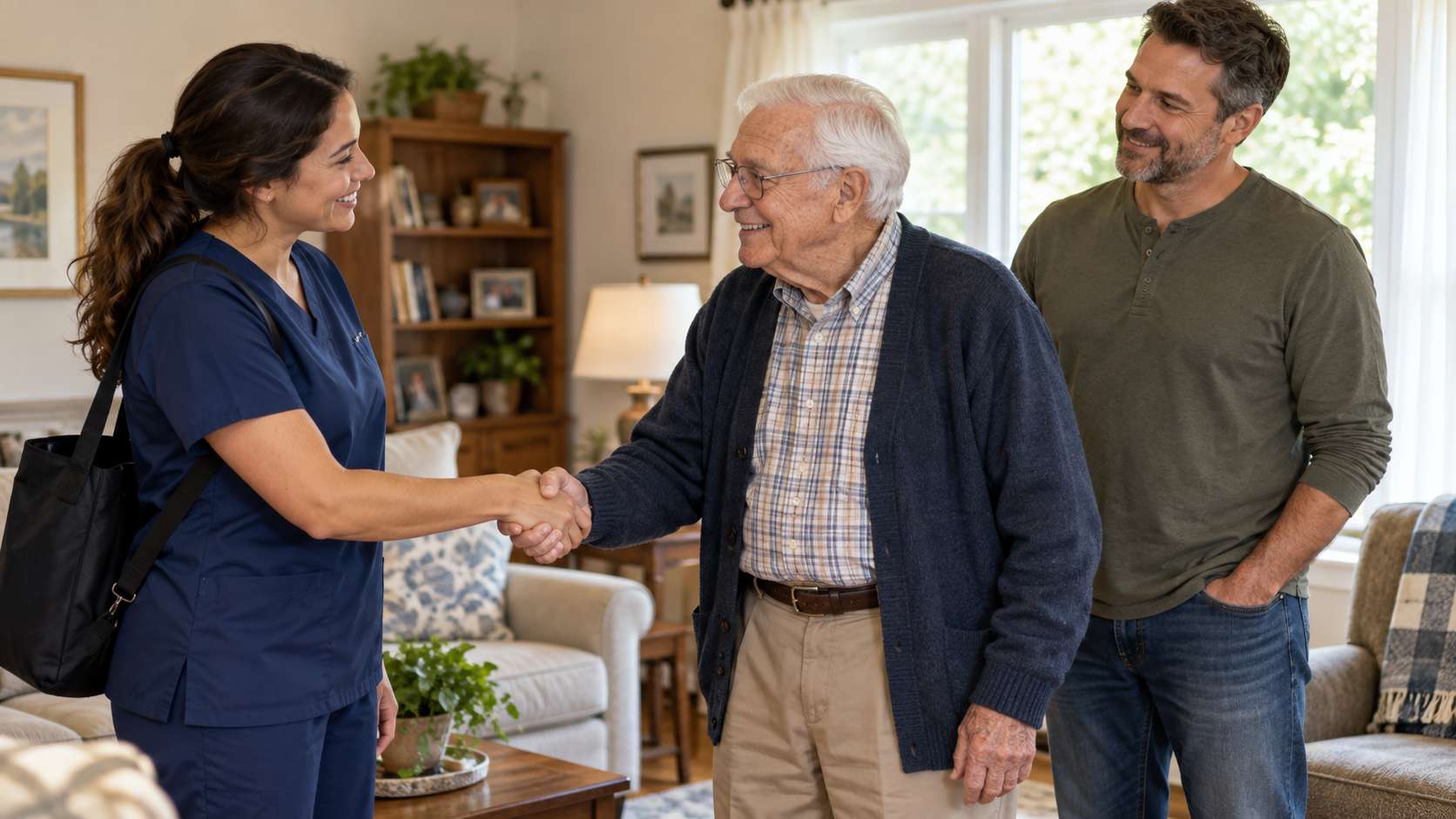
Before care starts, the aide visits for a meet and greet. It goes both ways. The person receiving care should feel at ease with the aide. The aide should feel ready for the role. If the match doesn’t feel right, we’ll look for someone else. Afterward, we follow up to hear how it went.
Step 5: Set a Start Date and Schedule
Once everyone is comfortable, you pick the days, hours, and start date. Some people need a few hours a week of companion care. Others need round-the-clock support or live-in care. You decide what works best. We build the schedule around that.
Step 6: The First Day of Care
On the first day, a registered nurse arrives about an hour before the aide. The nurse reviews health information and writes the care plan. The aide follows that plan from the very first shift. Our nurses stay involved after that, too. They check in by phone about once a month and visit in person every 60 days.
Who Home Care Helps
Every situation is different, but the steps above work the same way. These are the reasons people most often call us.
Older Adults Who Want to Stay Home
Many of our clients are seniors who want to keep living in their own homes. Some need a few hours of company and help with meals. Others need a hand with bathing, dressing, or getting around safely. Often an adult son or daughter makes the first call. Our home health aides handle this kind of daily support.
Adults Recovering After a Hospital or Rehab Stay
Coming home after surgery, a fall, or an illness can be harder than expected. Short-term help makes the first few weeks safer and less stressful. Learn more about our short-term transitional care.
People Living With Dementia
Memory loss changes what a person needs from one day to the next. Familiar surroundings and a steady routine often help. Our Alzheimer’s and dementia care supports both the client and the family.
Children With Medical Needs
Some families need skilled nursing at home for a child. That might follow a premature birth, a chronic condition, or a disability. Our pediatric home care brings experienced nurses into the home so children can stay with their families.
Veterans and Surviving Spouses
Veterans and their spouses may have benefits that help cover care at home. We work with many local veteran families. See our veteran home care services for details.
Family Caregivers Who Need a Break
Caring for someone you love is rewarding, but it’s also tiring. Respite care gives family caregivers time to rest, work, or travel while someone they trust steps in.
Families Facing the End of Life
When the focus shifts to comfort, many families want their loved one at home. Our home hospice care supports patients and families with compassion through that time.

Using Long-Term Care Insurance or VA Benefits
A long-term care insurance policy adds one step at the start. First, call the insurance company and tell them you’re ready to use the policy. The insurer sends its own nurse to do an assessment. That assessment sets the daily benefit amount. After that, call us and follow the same steps above.
Veterans and surviving spouses may also qualify for VA programs. Our article on VA Aid and Attendance benefits explains who may be eligible.
Do You Need a Doctor’s Order?
Not if you’re paying privately or using long-term care insurance. Families can call us directly. Medicaid works differently, since it needs a doctor’s script and approval from the health plan first. We’ve put those steps in a short guide you can download here (PDF).
Start the Conversation Early
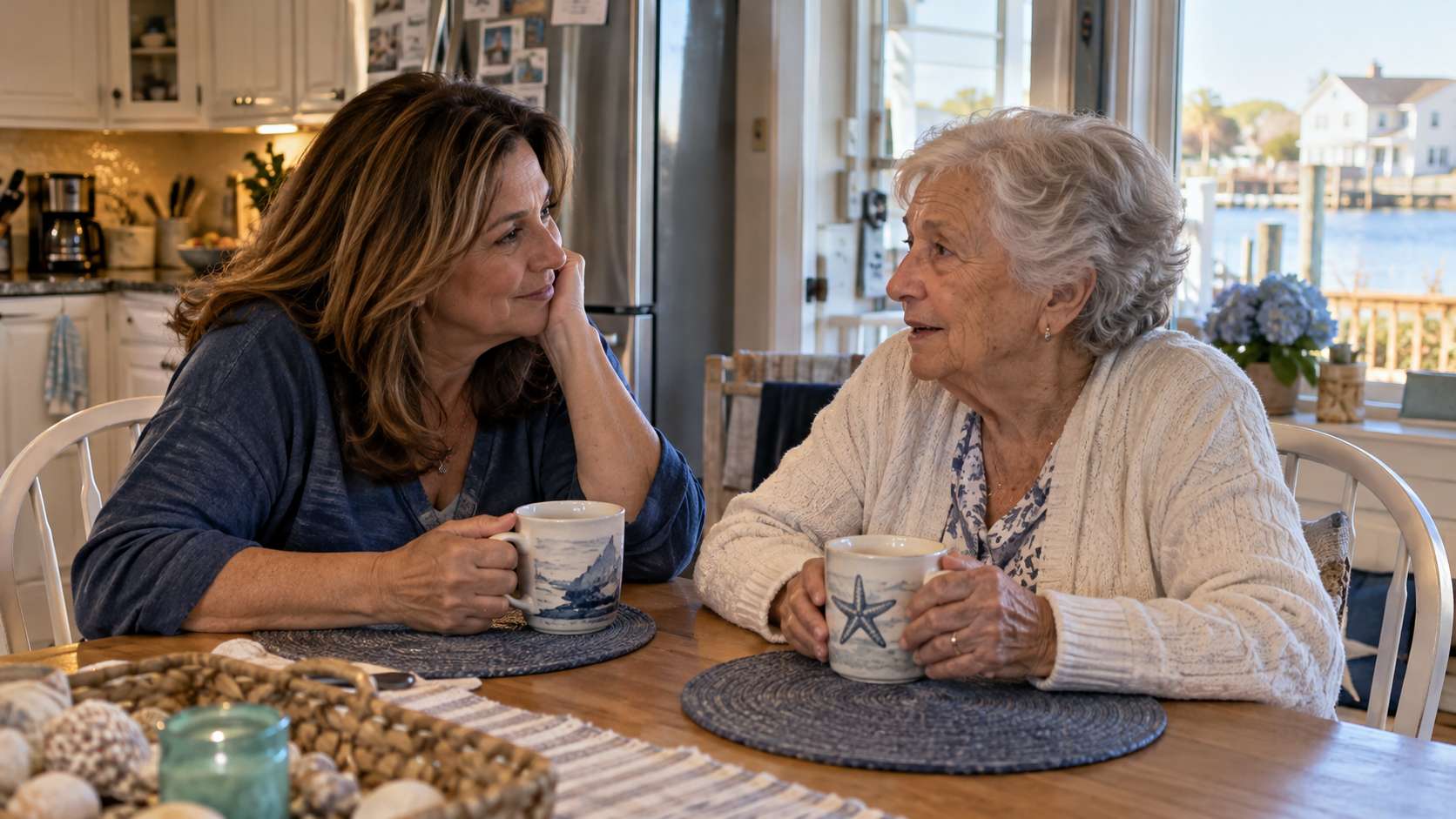
Sakirat’s advice to families is simple. Talk about home care before anyone needs it. If you have an aging parent or spouse, ask what kind of help they’d welcome. Ask who they want involved in decisions. These talks are far easier over coffee than in a hospital hallway. When the time comes, everyone will already know what to expect.
Why Families Choose Saba
- Independent and family-owned, not a franchise
- Licensed by the state Division of Consumer Affairs as a Health Care Service Firm
- Accredited with distinction by the Commission on Accreditation for Home Care
- Certified home health aides supported by registered nurses
- Care for seniors, adults, children, and veterans across Ocean and Monmouth Counties
Ready to Take the First Step?
Call 732-797-0700 or contact us online. We’ll listen first, then walk you through what comes next. There’s no pressure and no paperwork needed to start the conversation.